 English
 Español
 Português
 Pусский
How to Choose the Right One: Gate Valve vs Check Valve?
Choosing the wrong valve leads to leaks, pressure loss, and costly system failures. Don't risk your operations; understanding the distinction between these valves is vital for safety.
The main difference lies in operation and control. A gate valve is a bidirectional isolation valve used to manually stop or start fluid flow completely. A check valve is an automatic, unidirectional device designed solely to prevent backflow. Essentially, gate valves allow you to control the system, while check valves automatically protect pumps and equipment.
Ready to select the perfect component for your pipeline? Let’s dive deeper into the specific technical differences below.
Structure
When you look at these two valves side-by-side, the physical differences are immediately obvious, primarily driven by their operation mechanisms.
The Complexity of Gate Valves
A gate valve typically features a distinct handwheel or actuator on top, connected to a stem which leads down through a bonnet into the body. Inside, there is a "gate" or wedge that moves up and down to block the path. This design often makes gate valves significantly taller, especially if they use a rising stem mechanism where the threaded stem extends upward visually as you open it. This height is a critical structural factor you must account for during facility planning.
The Simplicity of Check Valves
In contrast, a check valve looks much simpler and more compact. It usually lacks a handle, wheel, or stem because it doesn't require outside manual operation. The body often looks like a simple elbow or a slightly swollen section of pipe. Inside, you will find a disc, ball, or clapper held in place by a spring or hinge. Because they don’t need an external control mechanism, check valves are generally smaller, lighter, and have fewer external leak paths than gate valves.
|
Feature |
Gate Valve |
Check Valve |
|
External Parts |
Handwheel, Stem, Bonnet |
None (usually) |
|
Internal Mechanism |
Sliding Wedge/Gate |
Disc, Ball, or Clapper |
|
Overall Size |
Taller, requires vertical space |
Compact, fits tight spaces |
Functions Comparison
The primary distinction between these valves is not just how they look, but the fundamental role they play in your fluid control strategy.
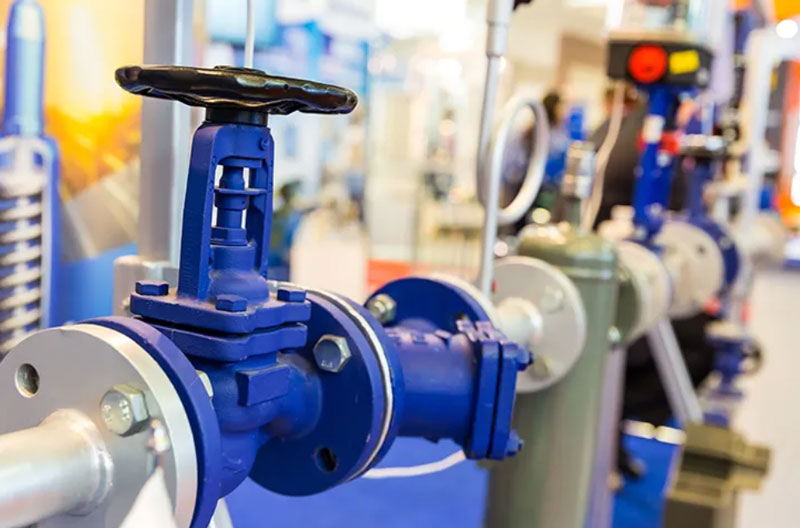
Gate Valves: The Isolation Expert
The gate valve’s job is isolation. You use it when you need a clear, straight-through flow of fluid with minimal pressure loss, or when you need to completely shut off a section of pipe for maintenance. It acts like a wall: it is either all the way up (open) or all the way down (closed). It is designed to block flow in both directions (bidirectional), making it versatile for general shutoff needs. However, it is not designed to regulate flow; it is strictly an on/off device.
Check Valves: The Backflow Guardian
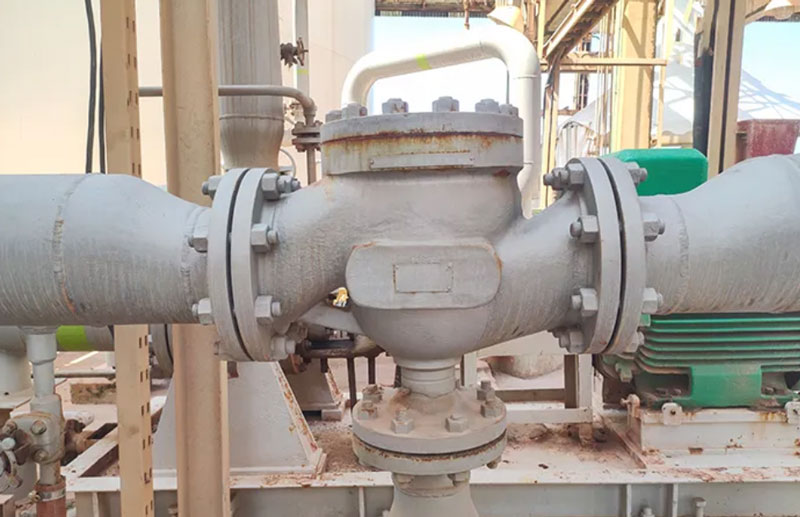
On the other hand, the check valve is the "guardian" of your pipeline. Its sole function is to ensure fluids only move in one direction. If the flow tries to reverse—which can damage sensitive pumps or contaminate the water supply—the check valve slams shut automatically. It is strictly unidirectional. You would never use a check valve to intentionally stop flow for maintenance because you cannot control it manually; it is there purely for passive protection against backflow.
Working Methods Comparison
How you interact with these valves differs entirely, affecting how you manage your daily plant operations.
Manual vs. Actuated Control
A gate valve requires an input from you or a machine. To work it, you have to physically turn a handwheel multiple times (multi-turn operation) to raise or lower the gate. This slow opening and closing process is actually a designed feature, not a flaw, as it prevents "water hammer"—a dangerous shockwave caused by stopping high-pressure fluids too fast. You have total agency over the state of the valve; it stays in the position you leave it in until you return to change it.
Automatic Pressure Response
Check valves, however, work on autopilot. They rely entirely on the pressure of the fluid itself to function. When the pressure upstream is higher than the "cracking pressure" (the minimum force needed to open the valve), the disc pushes open, and fluid flows. The moment that pressure drops or reverses, gravity or a spring forces the disc back against the seat, sealing the line. You don't have to do anything; the valve reacts to the physics of the system instantly and continuously.
Installation Requirements
Installing these valves requires different considerations regarding orientation and space planning.
Orientation Flexibility for Gate Valves
Installing a gate valve is generally straightforward regarding orientation. Because they are bidirectional, you can typically install them facing either way in the pipeline. They can be placed in horizontal or vertical lines, though installing them vertically with the handwheel on top is the standard best practice. This upright position prevents debris from settling in the bonnet and causing wear on the stem seals. The main constraint is headroom—you need enough space above the pipe to accommodate the rising stem.
Strict Flow Direction for Check Valves
Check valves are much fussier and require precise attention during installation. You must install them with the flow arrow stamped on the body pointing exactly in the direction of the fluid. If you put it in backward, the flow will be blocked entirely. Furthermore, the type of check valve dictates the orientation. For instance, swing check valves generally need to be horizontal so gravity can help close the disc, whereas spring-loaded lift checks offer slightly more flexibility but still have strict limitations.
|
Requirement |
Gate Valve |
Check Valve |
|
Flow Direction |
Bidirectional (Any direction) |
Unidirectional (Strictly follows arrow) |
|
Space Needed |
High vertical clearance |
Minimal clearance |
|
Pipeline Position |
Horizontal or Vertical |
Horizontal (mostly) or Vertical (specific types) |
Application Comparison
Understanding where to place these valves is key to designing an efficient piping system.
Gate Valve Scenarios
You will find gate valves in applications where the valve stays fully open or fully closed for long periods. They are the standard for main water supply lines, isolation points in oil and gas refineries, and large industrial plants. They are perfect for situations where you need full flow without obstruction. For example, if you need to isolate a boiler for repair, you would close the upstream gate valve to cut off the water supply safely.
Check Valve Scenarios
Check valves are essential components in pump systems and compressors. You will almost always see a check valve placed immediately after a pump discharge. This prevents the water from flowing backward into the pump when the motor turns off, which could spin the impeller in reverse and destroy the motor. They are also used in HVAC systems and sewer lines to stop wastewater from backing up into a building. If you have a sump pump, a check valve is what keeps your basement dry.
Maintenance Points
Every valve needs care, but the maintenance procedures for these two types are quite distinct.
Maintaining Gate Valves
Maintaining a gate valve usually focuses on the external moving parts. You need to regularly clean and lubricate the stem threads to ensure the wheel turns smoothly. Over time, the packing gland (the seal around the stem) might leak, but you can usually tighten or replace this packing without removing the valve from the line. The biggest risk is debris getting stuck in the bottom groove of the body, preventing the gate from sealing fully, so regular line flushing is important.
Maintaining Check Valves
Check valves are harder to maintain because the moving parts are internal. You can't "grease" a check valve. The main maintenance activity involves listening for "chatter" (a noise caused by the disc vibrating) or watching for backflow failures on gauges. If a check valve fails, it is usually because debris is stuck in the seat or the spring has worn out. Unlike gate valves, maintenance often requires opening the valve body or removing it from the line entirely to clean or replace the internal disc.
To recap: use gate valves for control and check valves for protection. Your system's safety depends on it.
FAQ
1. Can I use a gate valve to throttle flow?
No, you should not. Gate valves are designed to be fully open or fully closed. If you leave them partially open, the high-velocity fluid will vibrate the gate against the seat, causing severe wear ("wire drawing") and damaging the valve very quickly.
2. Can a check valve serve as a shut-off valve?
No. A check valve cannot be manually closed to stop flow. It only closes when the flow reverses. If you need to stop flow for maintenance or an emergency, you must use an isolation valve (like a gate valve) installed in series with the check valve.
3. Do gate valves reduce water pressure?
Gate valves have very minimal impact on water pressure. Because the gate lifts completely out of the fluid path when fully open, they offer a full-bore flow with almost no resistance, keeping the pressure drop significantly lower than other valve types.
4. Why is my check valve making a hammering noise?
This is often called "water hammer." It happens if the check valve closes too abruptly when the flow stops, sending a shockwave through the pipe. It can also happen if the valve is oversized for the flow rate. You may need a non-slam check valve to fix this.
5. How can I ensure I'm purchasing high-quality valves for my system?
When making critical purchasing decisions, choose a specialized manufacturer known for consistency and durability. At Hearken, we focus exclusively on delivering industrial valve solutions that meet rigorous safety and performance standards. For advice or inquiries about our products, contact us at info@hearkenflow.com.